For “Intro to Writing Arts” module 3, “Technologies and The Future of Writing” taught by Professor Shapiro, we explored the concepts of genre awareness and interface literacy. We demonstrated this through a variety of ways, from blogging to creating digital media like memes and GIFs. Below I’ll be discussing our two main points of study: Genre awareness and interface literacy.
Genre Awareness
For this section, I blogged about “Navigating Genres,” “A Brief History of the GIF,” and “Meme Genres.” All of this was to demonstrate how the definition of genre is not static, instead, it continues to evolve and incorporate new definitions as new forms of media.
Dirk, the author of “Navigating Genres,” wrote that,“genres [are] tools to help people…get things done” (252). Genre helps us create media that fulfills the readers’ expectations for it. (For example, readers pick up a nonfiction book to become better informed about a certain topic.) Without genre as a guiding force for us writers, we would fail to meet outside expectations for what we’re writing.
When it comes to digital genres like memes and GIFs, we’re guided by the expectations that accompany each genre and subsequent subgenre, like political memes and reaction GIFs. When I was creating my memes, I had the theme of “retail humor” that I was going with. Retail humor usually involves us dunking on a stereotypical customer or complaining about the usual horrors of retail. So I knew that my jokes had to meet those expectations.

This meme demonstrates the plight that pretty much every retail worker has gone through: Do we make the customer happy (and potentially get in trouble anyways) or follow policy and get screamed at? It’s always such a difficult decision to make when you don’t feel like dealing with yet another Karen.
Another example is one of my GIFs I made. It’s of an old Mickey Mouse cartoon with him gesturing and saying “crazy.”
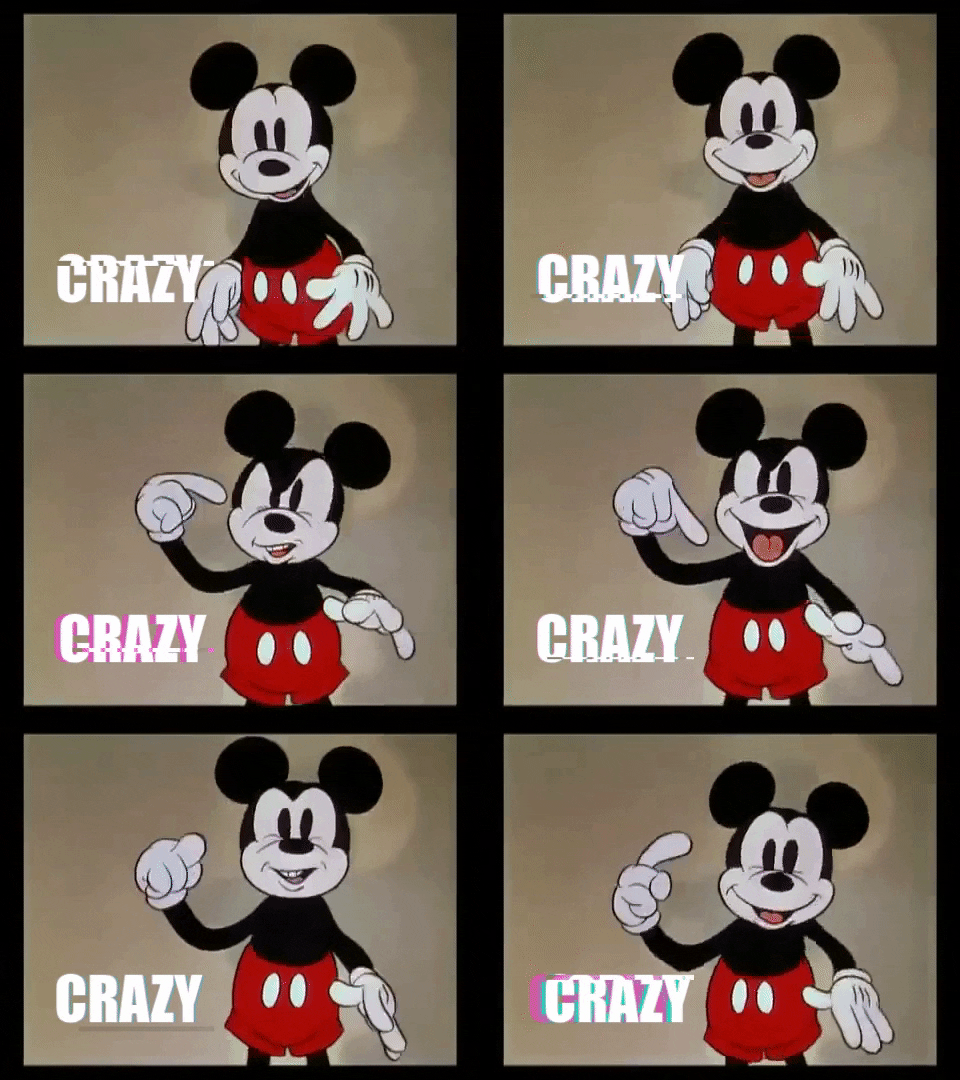
This kind of reaction GIF is a popular GIF throughout social media. It’s a quick and creative way to demonstrate how we feel about something or ourselves. (And in this case, I feel “crazy” about both my external and internal worlds!)
Eppink, the author of “A Brief History of the GIF,” defines GIFs as a form of identity-making (298). This is true regardless of the GIF’s subgenre (political humor, reaction, etc.) We use GIFs to convey a message or how we feel about something.

In the above tweet, I’m using a GIF of Steve Carell saying “We are screwed” with a solemn expression on his face to express my horror at my toddler’s newfound capabilities to get things off of high shelves or surfaces. I feel like this GIF, in its overdramatic expression, properly conveys my feelings about my toddler growing more independent.
Creating both GIFs and memes requires genre awareness, even for the “simplest” GIFs and memes. Making a reaction GIF requires something that could either express your humor or sadness; making a meme about the plights of retail requires you to have a sense of humor (albeit dreary humor) and knowledge of what goes on “behind the scenes” in retail workers’ day-to-day lives. Without genre awareness, we’re going in to the process of creation without the necessary tools. Therefore, our finished projects will fail to meet everyone’s expectations.
Interface Literacy
The nitty gritty of actually making memes and GIFs requires interface literacy. I had to figure out how to use sites like Giphy in order to be able to actually make these forms of digital media.

In “Interface Literacy,” I talked about how I went about creating my digital media and made comparisons to my late dad’s lack of interface literacy when it came to using things like the computer and the internet. However, I want to break it down even more here. Specifically, every step that went into making my GIFs and memes.
For Giphy, I first had to get to the site. This means that I had to know where the URL tab is located so that I could type in the site address.

From here, I was presented with a homepage. After creating my account, I located the “Create” button in the upper right hand corner.
Then I was given three options: To create my GIF either manually (frame by frame), to create the GIF from preselected media on the site, or to paste in a link to the clip that I wanted to create a GIF from. I chose the last option for all three of my GIFs because I had already figured out what media I wanted to create GIFs from.

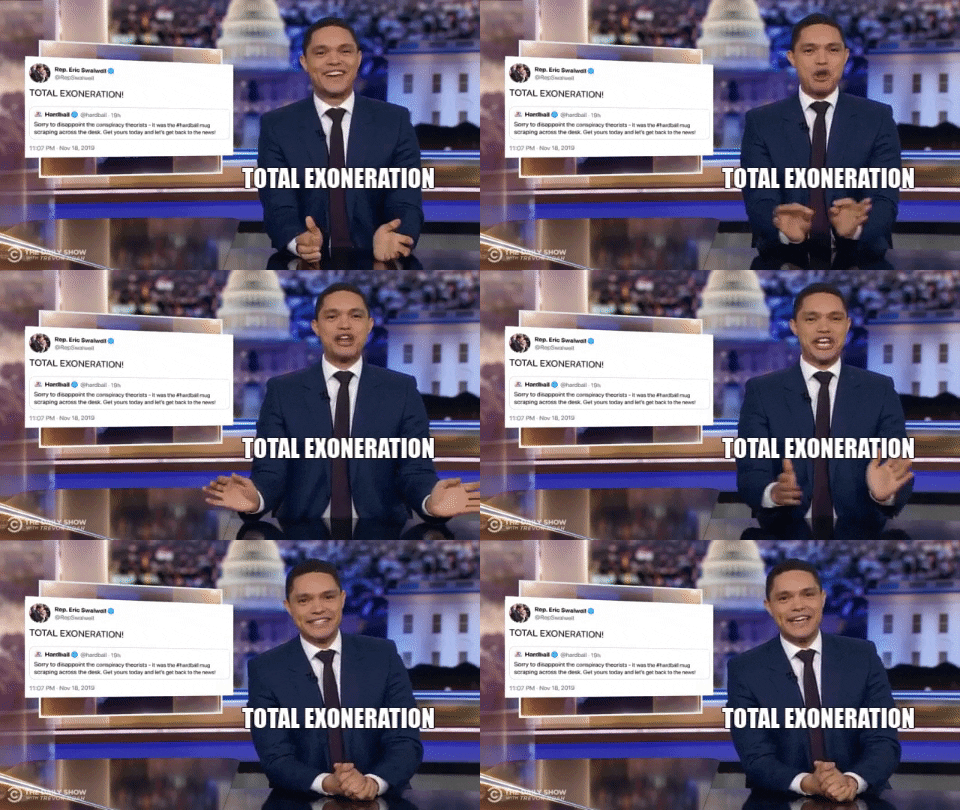
Once I clipped the parts of the videos or media and turned them into GIFs, I had the option of adding stickers or text before I finalized it. This enabled me to get a little more creative with the GIFs. (I didn’t choose any flashing text or anything because I’m not trying to give myself a seizure or a migraine! I just went simple.) I was able to add text (stickers weren’t fitting for the types of GIFs I was making, in my opinion) that expressed the part of the GIF I was trying to emphasize, like Trevor Noah saying “Total exoneration!” This was best done in plain white text, in order for me to have a clean, smooth GIF that didn’t distract from my main point.
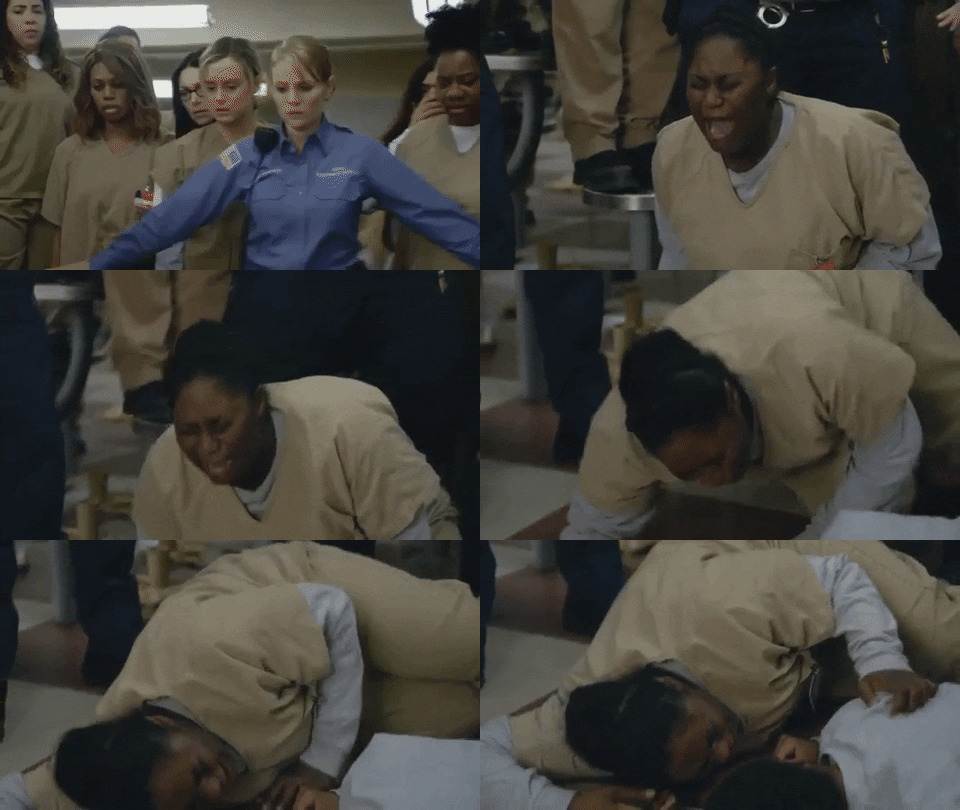
Or in the case of this next GIF, no text was required because all I wanted to capture was this emotional, heartbreaking scene in OITNB. (You know the scene.)
When I made my memes, it was hard to decide which website I wanted to use. Every site is a little bit different, and finding one that did what I wanted it to do took a little bit more time to decide on.
When I made my “Woman Yelling at Cat” meme, I used ImgFlip to use the “Woman Yelling at Cat” template for one of my memes, although they have many other templates on the site as well. (Like the “What if I told you…” meme template.)

My interface literacy enabled me to successfully navigate Giphy and other sites to create digital media that fulfilled reader (or viewer) expectations. If I wasn’t that great in navigating the internet, I would’ve had to read or watch tutorials in order to figure things out. (But of course, even getting to those tutorials requires some basic level of interface literacy in and of itself!)
In conclusion, genre awareness and interface literacy are tools that help us writers successfully navigate and create media that fulfills reader/viewer expectations. Genre awareness means that one has to be constantly aware of how genre is evolving, while interface literacy means that we also have to be aware of new technology and how to navigate it in order to avoid being left behind. Professor Shapiro’s module enabled me and my classmates to further our knowledge of how genre operates and how interface literacy is crucial in this digital age. I was personally able to demonstrate (imperfect) self-critical awareness of my writing and that I’ve grasped an understanding of how genre works and is applied in a variety of writing, fulfilling core values 1 and 5.
 IWA Fall 2019